Enigmatic Blackfoot Identifications
East of the Mississippi
and the
Piedmont Siouan of Virginia and North Carolina
By Linda Carter
Tutelo1 English
Isi foot
asepihiye blacken
Isi asepihiye Blackfoot
Sissipaha – A former small tribe of North Carolina, presumably Siouan, from their alliance and associations with known Siouan tribes. They must have been an important tribe at one time, as Haw River, the chief head stream of Cape Fear river, derives its name from them, and the site of their former village, known in 1728 as Haw Old Fields, was noted as the largest body of fertile land in all that region. It was probably situated about the present Saxapahaw on Haw River, in the lower part of Alamance County, North Carolina. — Bureau of American Ethnology, Bulletin 30.
If this huge settlement in the Haw river valley was called ‘Isi Asepihiye’ and the English heard it, they would likely slur all the double vowels. English speakers have trouble pronouncing the double vowels common to Native languages.. They also have difficulty accenting even numbered syllables in the way native languages are generally spoken. It’s quite likely they’d drop the initial ‘i’ sound, given those assumptions.
isi asepihiye = sissipaha
I think this makes for an exceptionally ‘clean’ corruption. It also makes sense as a name when you consider that the Haw river valley is the largest fertile plain in the region. The people there were great, prosperous farmers. Native farmers used slash and burn agriculture. Hence the emphasis on blackened feet. That’s where their prosperity came from, the crux of their economy. From the archeological evidence, they were a very dense population. Epidemics spread through them like wildfire (which is documented). Then, once the economy switched to the fur trade in order to compete in the European-imposed arms race, agriculture lost its importance economically.
The name Blackfoot would then have evoked memories of a much kinder and gentler past. Something a people facing chaos and oblivion would have treasured. Perhaps that’s why that name has been preserved in so many families for the past three hundred years.
The word “Blackfoot” has been carried in a small but distinct group of families that derived east of the Mississippi, and who could have no logical connection to the Blackfoot nation of the Plains. I would like to demonstrate that there is a distinct pattern of surnames and origins to this group, and that they hark back to an historic group of tribes by way of much intriguing evidence.
Identification
 I am in communication, at this point, with approximately five hundred families with this identification,. The incidence of surnames and locations that coincide with Eastern Siouan Indian families of the NC/VA Piedmont is very high.
For example, in a six week period, between December 16, 2002 and February 4th 2003, I heard from 18 different people with this Blackfoot ID in their families. Of them, 50% had names which occur among families believed or known to be VA/NC Piedmont Siouan descended. Eighty-one percent had surnames associated with VA/NC families believed or known to be Indian descended. Thirty one percent named these ancestors’ place of origin as Virginia or NC. Ninety-three percent were from states frequently mentioned by Piedmont Siouan researchers as migration paths for Piedmont Siouan descendants, OH, WV, TN, IN, SC, VA, NC, SC, Al MS, PA, IL.
Surnames
The names reported during this six week period that also occur among families believed to be Piedmont Siouan are:
| Day Williams Jones |
Scott Lane Anderson |
White Matthews |
 |
 |
|
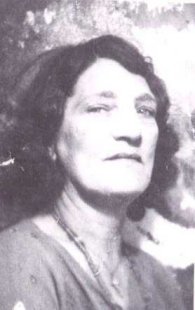
Day Family of Ohio
|
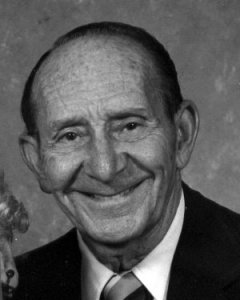
Jones/Smith Family of Indiana
|
The other names reported during this period that are found among NC/VA families believed to be Indian descended are:
Minor
Critchfield
WilliamsonSmith
Jennings
ThompsonMoss
Lee
Turner
Objections
There have been objections raised to the theory that the Blackfoot ID in families deriving east of the Mississippi are Eastern Siouan. This objection has an alternate theory that this ID is the result of the popularity of the western, Siksika, Blackfoot performers in the Wild West shows of the 1890s, making their tribal name a household word. So, the theory goes, families who had either Native blood they knew nothing about, but wanted to give a name to, or, families with some degree of African blood they were trying to disavow, borrowed the name Blackfoot.
If this were the case, then there would be a geographical source traceable to the 1890s. With these families, however, the geographical sources clearly traces back to Colonial days, with many of these Blackfoot ID’d families migrating to other states as early as the 1740’s.
Blackfoot Town
Between 1740 and 1780, there was a Blackfoot Town, MD documented in what is now Dagsboro, DE (the border changed). Interestingly, in 1743, there was a well-documented uprising of the Tutelo (Piedmont Siouan) and the Seneca against the British in that vicinity. This demonstrates this identification was found on the East Coast, with an association to the Piedmont Siouan, in Colonial times. I’ve also heard from other researchers of documentation they saw, but didn’t note the source for. One was of the “Blackfoot of the Dan” (a river in the VA/NC Piedmont). Another source was a reference to a group of tribes coming to the VA colonial government stating that they were banding together for strength and were calling themselves the Blackfoot. I’ve yet to find these sources and would appreciate word if anyone does find them. They may be in Colonial records in England.
Let me deal chronologically with what’s known about the village or tribe, the Sissipaha. I believe this translates as “Blackfoot.” The Sissipaha are associated with the Shakori and Eno branches of the Piedmont Siouan family or confederation of tribes. They were extremely early casualties of English encroachment and simultaneous conflict with the Iroquois.
Perhaps the most influential branch at time of contact was the Occaneechi, whose language was the trade language of the region. They controlled the Roanoke trade routes of the Piedmont. In 1674 they agreed to assist Nathaniel Bacon in his pursuit of a Susquehannock remnant. Bacon turned on the Occaneechi unexpectedly (in a sucker punch, if you will) and destroyed their village on an island in the Roanoke in what is now Clarksville, VA.
Siouan-speaking peoples
There are perhaps 20 tribes or villages of Siouan speaking peoples of the Piedmont who were constantly merging together for protection through harrowing times. (Though very distantly related to the Sioux tribes of the west, we must be careful not assume too great a cultural similarity.) Eno are mentioned as one of the groups huddled at Fort Christanna in 1713-1717. Some accounts refer to them as the Stuckenock. Presumably, Sissipaha survivors would have been associated at that point. There is also mention of the Sissipaha/Shakori/Eno joining the Catawba (also Siouan) in northern South Carolina in roughly this period.
Fort Christanna period
During the Fort Christanna period, Governor Spotswood of Virginia, for his convenience, dubbed all the Siouan tribes there as “Saponi.” That, and the word Tutelo, dominated the naming of these people in historical references from then on. For that reason, we will refer to the Eastern, Piedmont Siouan as “Saponi” in most of the following. The historical record runs mainly as such:
Probably about 1740 the Saponi and Tutelo went north, stopping for a time at Shamokin, in Pennsylvania, about the site of Sunbury, where they and other Indians were visited by the missionary David Brainard in 1745. In 1753 the Cayuga formally adopted the Saponi and Tutelo, who thus became a part of the Six Nations, though all had not then removed to New York. In 1765 the Saponi are mentioned as having 30 warriors living at Tioga, about Sayre, PA, and other villages on the northern branches of the Susquehanna. A part remained here until 1778, but in 1771 the principal portion had their village in the territory of the Cayuga, about 2 miles south of what is now Ithaca, NY. After which they disappear from history [the Saponi, that is – the Tutelo survived a bit longer with the Cayuga on Six Nations reserve in Canada. A cholera epidemic in the late 1800’s reduced their numbers to the point that the survivors merged with the Cayuga. Some of their customs and ceremonies are still observed, and they have many descendants there]. — Bureau of American Ethnology, Bulletin 30, page 464.
What has interested me, however, since it appears my own family was among those who “had not then removed to New York” are the other clues to migrations that did not end in total biological extinction.
Resisting adoption into the Haudenosaunee Confederacy
I believe that a factor which motivated many Saponi to resist adoption into the Six Nations was the bitter warfare which had existed between the Iroquois and the Saponi for many years, going all the way back to the Mourning or Beaver Wars of the 17th century. The attrition devouring the Saponi from this bitter feuding was a major factor in routing them from their homelands. It would seem natural that some of them would have felt reluctant to capitulate so totally to their hereditary enemies.
Another factor would be the precocious Anglicization of the Saponi, which would have adapted them well for life within the frontier economy. During their stay at Fort Christanna (circa 1720) a number of children were taught by a Mr. Griffin in an “Indian School”. Mr. Griffin was reported to be a kindly teacher much enjoyed by his pupils. This description unlike the horrendous abuse associated with most 19th and 20th century Indian schools. Saponi children were also sent to a boarding school at William and Mary College
There is a documentary associated with archeologists at George Washington Forest (just above Roanoke VA), “The Last of the Tutelo”. The narrative in this documentary characterizes the northward bound Tutelo population as relatively worldly, and sought-after for diplomatic purposes, and their knowledge of English. It was reported in this piece, that Shickellamy, the Six Nations diplomat who coordinated the tributary tribes of Pennsylvania, was married to a Tutelo woman. In 1747 Shickellamy’s first wife died in Shamokin of a disease that spread through there. Shortly thereafter he married a Tutelo woman. He then died Dec. 12, 1748. She then remarried and is noted passing through Shamokin with her new husband on March 20, 1749. This is from the Moravian Archives.
Mingo
I’ve been corresponding for some years with the Mingo-EGADs e-list, devoted to resurrecting Appalachian Iroquois, a close dialect to the Seneca language, which was still spoken in some isolated WV communities as late as the 1950’s. I was alerted to subscribe to this e-mail list when posts were circulating called “The Blackfoot of the Seneca.” Some of the list members recalled seeing a roadside marker by this name in Elkins, WV. The Mingo language informant, Dr. Thomas McElwain, states that “literally everybody in the town of Mingo at the south end of Randolph country [WV] is a Blackfoot.” Dr. McElwain is a Professor of Comparative Religions, and a native of Elkins, WV.
It’s a matter of record that there were Saponi adopted by the Cayuga, some of whom migrated to the Sandusky in Ohio, taking their Saponi adoptees along. This community was referred to as “The Seneca of the Sandusky” though there are reports from visitors to the area that there was ‘nary a Seneca amongst them.’ My understanding is that this was another tributary amalgamation supervised by the Seneca.
When the League of the Iroquois lost their holdings in Pennsylvania and Ohio, they took many of their tributary tribes in with them to what would become their reserves. It’s doubtful there were enough resources to take in all that many. Many of these groups simply held on where they were until squeezed out by settlers. Some are documented as moving further into the Midwest. What’s less documented is the obvious recourse of fleeing deeper into the Appalachians. When we consider that the Native language still being spoken in West Virginia in the 1950’s was a dialect of Seneca, it’s obvious that the former tributary tribes of the League are the likeliest source. It’s unlikely that so large a group of Seneca would have slipped into the mountains and been forgotten about by them. But an amalgam of tribes already marginalized politically, with only the Seneca language in common, would be likely candidates to slip away into these hollows and be forgotten by history.
“Blackfoot of the Seneca”
The documentation of a band known as the “Blackfoot of the Seneca” in WV, and the close associations of the Saponi/Tutelo people with the Seneca in the 18th century, combined with the other associations of the term Blackfoot with the Saponi/Tutelo is still another shred of tantalizing evidence.
Adding to the evidence of Appalachian migrations is the very high incidence of the Blackfoot ID in families from Clay and Knox Counties in KY. Some of these families have surnames, and lineages, leading back to the Piedmont Siouan.
Richard and Vicky Haithcock
I first encountered the information linking the word Blackfoot to the Saponi in Richard and Vicky Haithcock’s book, “Occaneechi Saponi and Tutelo of the Saponi Nation: aka Monacan and Piedmont Catawba.” The Haithcocks are part of the Ohio Saponi community. The association of the word “Blackfoot” with Saponi has been held traditionally in that community. I’ve presented the word “Sissipaha” as a link to the word “Blackfoot,” simply because it fits so cleanly with the recorded Tutelo words. I may also be motivated by a desire to trace the word to a single, tangible source. It’s my understanding, however, that The Ohio Saponi feel that the word “Blackfoot” refers to the entire confederation of Saponi – that the word “Saponi” itself is a corruption of words for “Blackfoot.”
Lawrence Dunmore
Lawrence Dunmore III, Esq., and former chairperson of the Occaneechi Saponi Band of the Saponi Nation in Hillsborough, NC, has studied the Tutelo language extensively and explained to me that there is confusion surrounding the English corruption of Saponi tribal names. The country farmers of North Carolina used badly mangled, abbreviated corruptions, while across the border, the plantation owners of Virginia used longer, more accurate corruptions, all pointing to the same villages or tribes. Richard Haithcock, in his book, lists the words Mansickapanaough, Monasiccapano, Monasukapanough, Saxapawha, Sissipahaw, Siccaponi, Siccasaponi, Sikaponi, Shaponi, Saponi and states that they are all thought to be corruptions related to this meaning.
In researching these tribes, Lawrence Dunmore points out some definitions of words that will be useful to keep in mind. “The term Stuckenock was used by the Virginians to describe the Eno, Shakori and Sissipahau peoples while individual terms were used for each group by the North Carolinians. All three were one people, recognized by Virginia as Stuckenock and were part of a larger group of people, Yésah.” [the Saponi]. Also, “the term Adshusheer was the name of a Eno village and the term Keyuawee was a Shakori village. They were not separate tribes.”
Blackfoot/Saponi link
I found another, interesting instance of an historic knowledge of a Blackfoot/Saponi link. It was from a man whose family has lived historically on the NC/SC border in Catawba territory. This coincides with the historic record, which reports the Sissipaha/Shakori/Eno fleeing to the Catawba. Some are reported to have left the Catawba after a time, but some remained.
The question of whether the word Blackfoot refers to a segment of the Eastern Siouan or can speak for the whole Saponi population is a subject for further inquiry. Perhaps as more descendants surface, the answers will become more clear. On this website, we invite any visitors to post their family lore to the forum. Reported migration paths of Blackfoot identified people tracing back to the NC/VA Piedmont so far include Tennessee, Kentucky, West Virginia, Maryland, Ohio, Pennsylvania, Indiana, Illinois, Wisconsin, Idaho, Arkansas, Alabama, Mississippi, Oklahoma and Texas. What’s remarkable is that, whenever any of these families can be traced back far enough, the lead back to VA or NC.
Oral tradition
The tradition in my own family is that we are “related to a Blackfoot chief.” Since pondering all of this data, I’ve called a number of my grandmother’s lines into question. Of them, the following names are found in other families with the Blackfoot ID: Harris, Keasey, Severance. Our Smiths were near the location of a church founded in the 1820’s in western Indiana. Our Hudsons and Keaseys are corroborated by other lines in the family as Indian descended. The Hudsons were from Maryland, about 100 miles from the location of the “Blackfoot Town” mentioned earlier. My Hudson ancestor was listed on his death certificate as “American”. Everyone else on the page, in the same handwriting, were listed as “Caucasian.” From family photographs, I can see that an epicanthic fold was in the Hudson line. The Keaseys in our family had a strong Indian appearance as well. My cousin, who favors that line, resembles a friend of mine from the Tuscarora reservation in Lewiston, NY.
Our Thomas Harris, grandfather of the man pictured on the first page of this article, appears on the 1810 census in Chambersburg, PA. Chambersburg lies along the Tuscarora Path. The path was also used by Saponi people migrating North. It is less than 100 miles, on all sides, from Shamokin and Paxtang PA, and Elkins, WV. My great-grandfather reported that the family derived originally from Virginia.
An Indian Trader lived in that valley ca. 1740 – 1780, named Captain Thomas Harris. He had an Indian wife named Mary McIntyre. A friend claims to be her descendant and is from the Ohio Saponi community. He currently lives at Six Nations reserve in Canada with his wife. A succeeding generation of Harrises in that locale include a Charles and Thomas. Both names that occur in our family in later generations.
Chief Harris, John Buck
John Buck, one of the last Tutelos at Six Nations, was interviewed by anthropologist J. Owen Dorsey at Six Nations Reserve in 1882. Interestingly, John Buck reports a Chief Harris. John Buck said that this Chief Harris led a loyalist faction of Southern Saponi n=North to New York to join Joseph Brandt and the Loyalist Iroquois at the start of the Revolutionary War. There is a document to this effect in the National Anthropological Archives in Washington, D.C. I have also found mention of a Cheraw chief by the name of Harris.
Coreogonel
As mentioned earlier, the Saponi in the village of Coreogonel (near Buttermilk Falls) disappeared from the village history around Ithaca, NY in 1770. In adjoining Cayuga, and Onandaga counties in the 1820 census are numerous instances of surnames heavily coincidental to those cited frequently as established or suspected Piedmont Siouan families in Virginia and North Carolina. There are numerous Harrises on those census.
There’s one other odd coincidence. Our family settled in Vernon County, WI by the 1860’s. There is a community there that does have strong documentation of Indian origins. They migrated there from Granville and Robeson Counties, NC, about the same time we did. We are related to them by marriage.
I live now in Virginia. I was raised in Chicago. My family has lived in Illinois or Wisconsin since the 1850’s. My ex-husband and I met in Los Angeles in 1987. We both knew we had Indian ancestry. About a year after I’d begun my inquiry into all this, he became interested as well. His father’s family has always lived in Mecklenburg country, a few miles from Occaneechi Island. His mother’s family has always lived in Brunswick County VA, on land within the boundaries of the Fort Christanna reservation. By the theory of “who’s buried in Grant’s Tomb?” combined with a perusal of his family photo album and family reports of individual Indian ancestors, he is mostly likely one-third Piedmont Siouan himself, from people who never left those homelands.. He has since learned that some of his Brunswick County cousins refer to themselves as Blackfoot. At present, we are no longer connected to the same Native heritage interests or groups.
Bibliography
- Hodge, Frederick Webb. Handbook of American Indians North of Mexico. Washington: Government Printing Offices, 2 vols., 1907-10.
- Mooney, Siouan Tribes of the East. Bull. Bureau of American Ethnology, 1894
- Right, Douglas L. The American Indian in North Carolina, Durham, NC, Duke University press, 1947.
- Swanton, John R., The Indian Tribes of North America, Washington, Smithsonian Institution press, 1952.
- Swanton, John R., The Indians of the Southeastern United States, Washington, U.S. Govt. Printing Office, 1946.
About The Author:
Linda Carter lives in Clarksville, VA with her four children.
Footnotes
- Tutelo words are from: Dictionary of the Tutelo Language, by Horatio Hale.
- Documentary: Last of the Tutelo, produced and distributed by Hopkins Planetarium in Roanoke, VA.